If My Bank Account Is Frozen, Can I Open Another One?
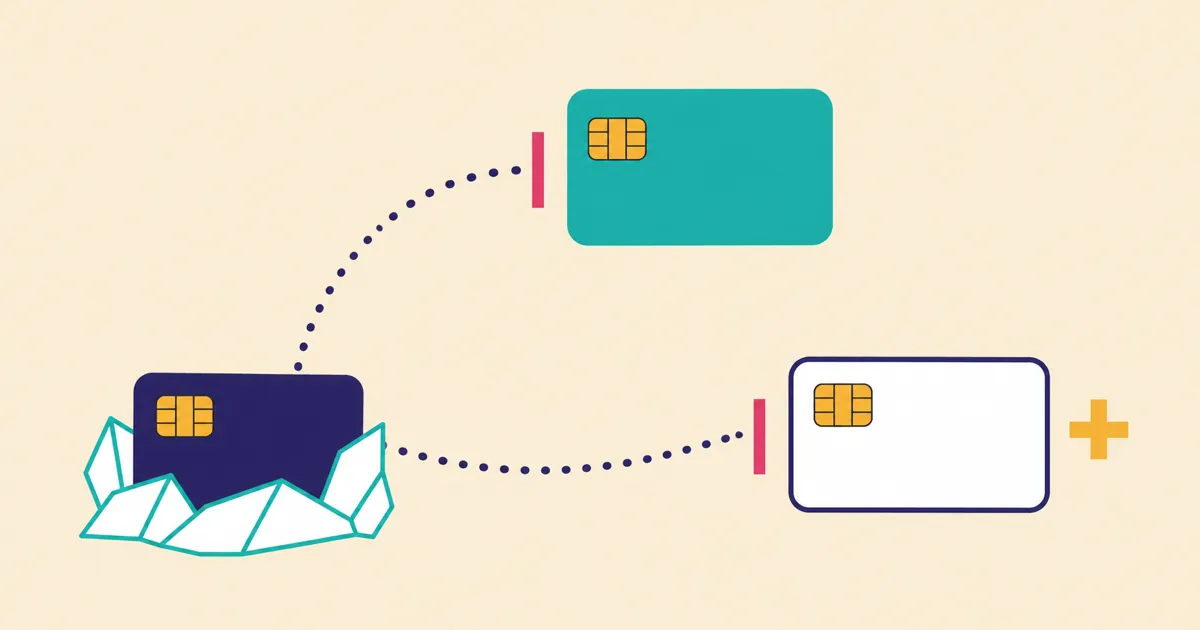
Read on its wording, nothing in a UK freezing order itself stops you. An account freezing order is made "in relation to the account in which the money is held", and what it does is stop withdrawals and payments from that account. It does not, by its wording, reach your other accounts or forbid a new one somewhere else. The thing that can follow you to the next bank is a fraud marker filed with Cifas, whose members include most banks. When a marker is wrong, the Financial Ombudsman Service says customers may find "their bank account is closed, and they can't open another one". Cifas says the information can be held for up to six years.
So the useful question is which of two things happened to the first account. Say you sell USDT to strangers for pounds and the payments land in your current account. One buyer's money turns out to have come from a fraud victim. From there, an officer might go to court for an order over that account, or your bank might act on its own: close the account, and record what it concluded with Cifas. They travel very differently.
Does a freeze follow you to your other accounts?
A court order follows the money. A marker follows the person. Most of the confusion online comes from treating those as the same event.
If an authority froze the balance, the order is attached to a specific account and the bank holding it is the one that carries it out. Your account at a different bank is not mentioned in it and is not touched by it. If, on the other hand, a bank decided the account had been used to move fraudulent money, the consequences can reach well beyond that one account, because the bank can share its conclusion with others through a fraud prevention database.
Not sure which one you are dealing with? Bank block vs legal freeze walks through how to tell, starting with whether your bank can lift it by itself.
An account freezing order is about one account
The Proceeds of Crime Act 2002, section 303Z1, sets the trigger. It applies "if an enforcement officer has reasonable grounds for suspecting that money held in an account maintained with a relevant financial institution" is recoverable property, or is intended by any person for use in unlawful conduct. The officer then "may apply to the relevant court for an account freezing order in relation to the account in which the money is held."
The effect is spelled out in subsection (3)(a): the order "prohibits each person by or for whom the account to which the order applies is operated from making withdrawals or payments from the account", subject to any exclusions.
Read the nouns. The account in which the money is held. The account to which the order applies. Each step is pinned to an account, so a second account at another bank would need its own grounds and its own application. If you have been told an order exists and you do not know who obtained it, finding the authority behind it is covered in frozen by an authority elsewhere.
The frozen account can still cause other trouble. The order on its own will not stop a new account opening.
The fraud marker that stops a new account
Cifas describes its members as "most banks, credit providers and telecommunication companies". That breadth is what gives a marker its reach.
The ombudsman's page on fraud markers puts the consequences of a wrongly recorded marker in a plain list. Customers may find they can't open a bank account; that "their bank account is closed, and they can't open another one"; that a mortgage application is rejected. That middle item is the situation people search for after a freeze, and the marker is what produces it.
So if a P2P seller is turned away by a bank they have never banked with, the freezing order cannot be the reason on its own. A marker recorded by another member is the thing to check first.
How to check for a Cifas marker
You ask Cifas directly, with a free data subject access request (DSAR). Where to find the form, how long Cifas has to reply and how a marker differs from your credit file are covered in does a frozen bank account affect your credit score.
Our view for a P2P seller: send the request before you apply anywhere else, and keep your order history open when the reply arrives. Each entry has a date and the name of the member that recorded it; lining those dates up against your P2P orders shows which payment the bank acted on, and that is the payment your challenge has to explain.
Challenging a marker, in the right order
Cifas is clear about the first step: "the first thing you should do is contact the organisation who recorded the information to Cifas." In the P2P example above, that would be the bank that closed the account. Put your explanation in writing and attach what supports it: the P2P order history for the payment in question, the buyer's payment details, the chat log, and statements covering the same dates.
If the organisation's final response does not satisfy you, Cifas can be asked to review the matter.
The ombudsman is the next door, with one limit worth knowing in advance. In its own words, "We can't look at complaints against fraud prevention agencies themselves. But we can look at complaints about financial businesses that have passed information to a fraud prevention agency." So the complaint you take to the ombudsman is against the bank that filed the marker. The same page, written for firms, gives banks 15 working days to reply to a complaint about fraud or a scam; its summary line is "you must respond within 15 working days". The ombudsman's page is the reference for the current rule.
Two more questions
Can my partner's account be frozen because of mine?
Not by being related to you. An account freezing order is applied for in relation to the account in which the suspect money is held, and it binds the people who operate that account. If money an officer suspects ends up in your partner's account, that account can be the subject of its own application. That is one more reason not to move money between household accounts while yours is frozen.
How long does a Cifas marker stay on file?
Cifas says information can be held in its database for up to six years. That is a ceiling, not a sentence you have to serve: a marker that was filed on a mistaken view of the facts can be challenged, first with the organisation that recorded it.
Sources (checked 2026-10-08): Proceeds of Crime Act 2002, section 303Z1 (when an enforcement officer may apply for an account freezing order, and what the order prohibits) · Cifas, information for individuals (who the members are, the free data subject access request and its one-month response time, the six-year retention period, and contacting the recording organisation first) · Financial Ombudsman Service, fraud markers (what customers may face when a marker is wrong, what the ombudsman can and cannot look at, and the 15-working-day response summary). Written from published law and the organisations' own pages, not from a case we handled. Rules differ by country; the papers you receive and your local rules govern. Independent guide, not a bank, police force, court or exchange channel; general information only, not legal advice. We only cover lawful self-protection, and we do not explain how to evade law enforcement or move funds.
Related: Bank block vs legal freeze · Frozen by an authority elsewhere · Restricted, not frozen · Frozen account and your credit